


Whether you call it the infield or the baseball diamond, this 90-foot square is the heart of the game. While it looks like a simple shape, the diamond is a precision-engineered playing surface with strict measurements that change depending on the level of play.
In this guide, we break down exactly what makes a “diamond” and the specific dimensions required for a professional-grade field.
What is a Baseball Diamond?
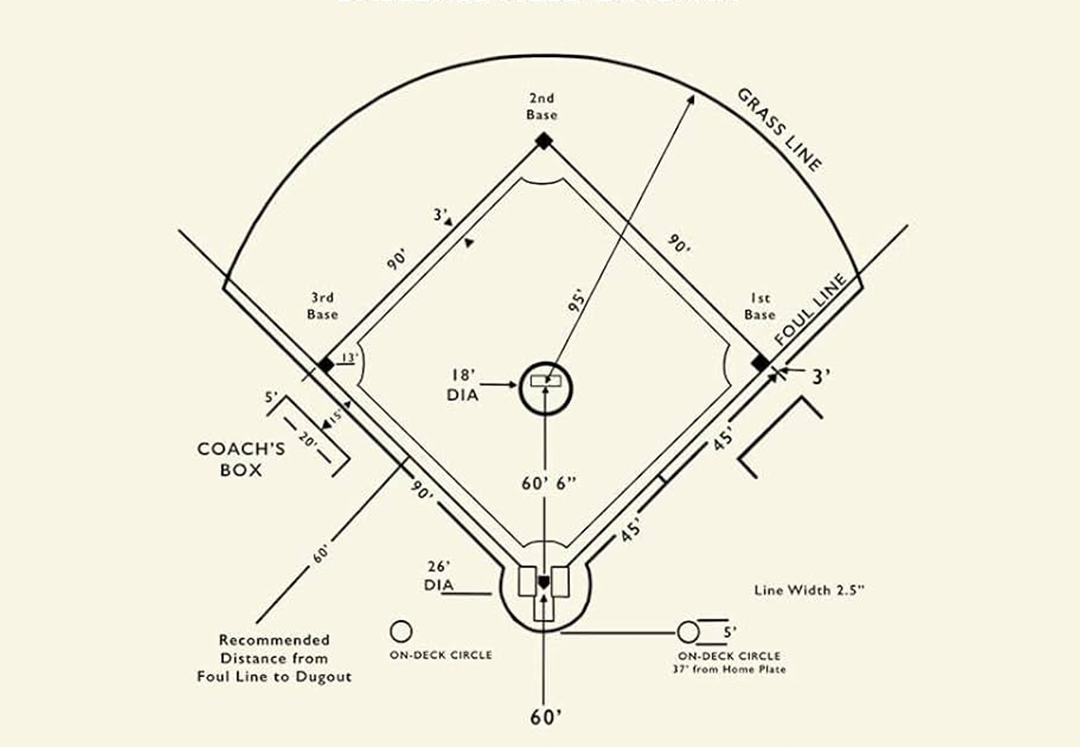
Technically, a baseball diamond is a square set at an angle, measuring 90 feet on each side for Major League Baseball (MLB). The “points” of the square are Home Plate, First Base, Second Base, and Third Base.
Key Dimensions (MLB Standard)
| Feature | Distance |
| Base Paths | 90 Feet |
| Pitching Distance | 60 Feet, 6 Inches |
| Home to Second Base | 127 Feet, 3 3/8 Inches |
| Infield Arc Radius | 95 Feet |
Gemini said
To rank baseballzone.net for the term “baseball diamond,” we need to address the most common user intent: “How big is it?” and “What are the parts called?”
In 2026, Google rewards content that uses “Entity-Based SEO”—meaning we don’t just use the word “diamond,” but we explain the relationship between the mound, the bases, and the foul lines.
Article Metadata & SEO Parameters
- Primary Keyword: Baseball Diamond
- Secondary Keywords: Infield dimensions, pitching mound distance, base path length, baseball field layout, 90-foot diamond.
- SEO Title: Baseball Diamond Guide: Dimensions, Layout & Pro Measurements
- Meta Description: How big is a baseball diamond? From MLB’s 90-foot base paths to Little League specs, learn the exact dimensions and layout of a professional infield.
- URL Slug:
baseballzone.net/baseball-diamond-dimensions-layout-guide/
The Article
The Baseball Diamond: A Complete Guide to Dimensions and Layout
Whether you call it the infield or the baseball diamond, this 90-foot square is the heart of the game. While it looks like a simple shape, the diamond is a precision-engineered playing surface with strict measurements that change depending on the level of play.
In this guide, we break down exactly what makes a “diamond” and the specific dimensions required for a professional-grade field.
What is a Baseball Diamond?
Technically, a baseball diamond is a square set at an angle, measuring 90 feet on each side for Major League Baseball (MLB). The “points” of the square are Home Plate, First Base, Second Base, and Third Base.
Key Dimensions (MLB Standard)
| Feature | Distance |
|---|---|
| Base Paths | 90 Feet |
| Pitching Distance | 60 Feet, 6 Inches |
| Home to Second Base | 127 Feet, 3 3/8 Inches |
| Infield Arc Radius | 95 Feet |
The Core Components of the Diamond
1. The Pitching Mound
The mound is a circular hill 18 feet in diameter. The center of the mound sits 60′ 6″ from the back point of home plate. In 2026, groundskeepers use specialized “mound clay” to ensure the slope stays consistent—dropping exactly 1 inch for every foot toward home plate.
2. The Base Paths and “Skinned” Area
The dirt portion of the diamond is known as the “skinned” area. While the distance between bases is 90 feet, the paths are actually 3 feet wide.
- First & Third Base: These bags sit entirely inside “fair territory.”
- Second Base: Unlike the others, second base is centered directly over the corner of the diamond.
3. Home Plate: The Diamond’s Apex
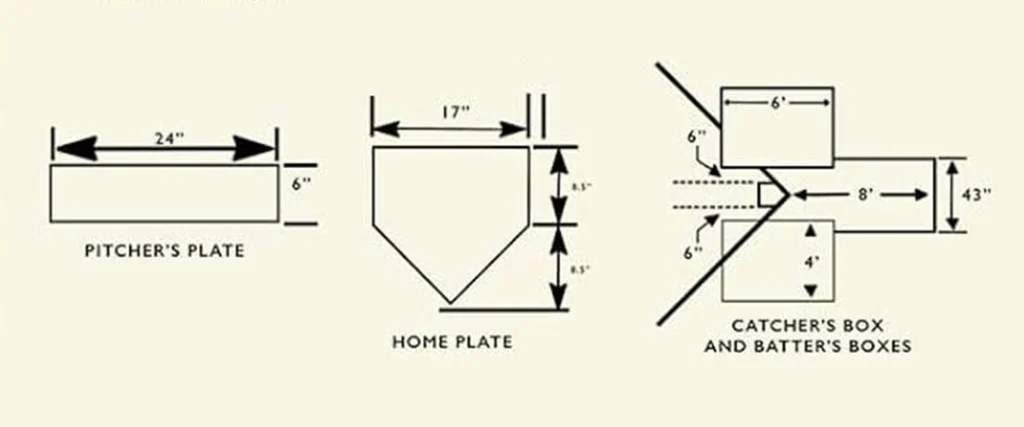
Home plate is a five-sided slab of whitened rubber. It acts as the starting and ending point for every run. Its unique shape is designed so that the two 12-inch edges line up perfectly with the first and third-base foul lines.
Why Do Dimensions Change for Little League?
Not every diamond is 90 feet. To accommodate younger players, the “diamond” shrinks to help with safety and playability:
- Little League: 60-foot base paths and a 46-foot pitching distance.
- Junior League: 80-foot base paths and a 54-foot pitching distance.
Expert Insight: If you are building or maintaining a diamond, the “orientation” matters. Professional fields are ideally laid out so that the line from home plate through the pitcher’s mound runs East-Northeast. This prevents the afternoon sun from shining directly into the batter’s eyes.
Maintaining the Diamond for Performance
A professional diamond requires daily care to prevent “bad hops.” This includes:
Moisture Control: Keeping the dirt damp enough to stay firm but not muddy.
Nail Dragging: To keep the infield skin smooth.
Edging: Ensuring a sharp, clean line where the grass meets the dirt.